

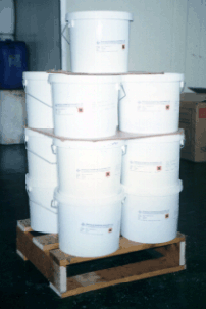
CENO HANDY FLO111 | |||||||||||||||||||||||||||||||||||||


| |||||||||||||||||||||||||||||||||||||
 | |||||||||||||||||||||||||||||||||||||
| (Cu Paste Flux BD 101) | |||||||||||||||||||||||||||||||||||||
 | |||||||||||||||||||||||||||||||||||||
|
Compatibility
Fluxes are available packed in 1,5,10 and 25Kg containers, dispensing fluxes are also available packed in cartridges to suit most automatic application systems Functions of the Flux Brazing alloys will generally require the joint surfaces to be chemically
clean of grease, dirt, oxides. When metals are exposed to air, they react chemically and the rate of reaction is normally accelerated as the temperature increases. The most common reaction results in the formation of oxides, although nitrides and even carbides may formed in some circumstances. The rate of oxide formation will vary according to the particular metal composition and the characteristics of the oxide. These characteristics include the hardness, structure, thickness, and resistance to removal and the tendency for further oxidation all of which need to be considered. For example, oxide formation in air on some metals such as aluminium occurs instantaneously at, or even below, room temperature. Generally, such surface oxidation or other contamination will form a barrier to the successful wetting of the brazing alloy onto the joint surface and will thus prevent the formation of a satisfactory joint. Fluxes are not designed as basic cleaning agents for the primary removal of oxides, oil, grease, dirt, or other contaminations from the joint area. Therefore pre braze cleaning must be carried as required by the particular metals being joined. During brazing, fluxes are often needed to combine with, remove, or dissolve residual contaminant compounds or such products of the brazing operation which would otherwise impede filer metal flow. Oxides are the main form of surface contamination and the dissolution and removal of those oxides are the most common functions of a flux. In addition, it is important not to restrict metal flow, so the molten flux must also be fluid and capable of being readily displaced by the molten brazing filler alloy. Thus the wetting ability and viscosity of fluxes at brazing temperature are important characteristics. Certain brazing alloys, such as the copper phosphorus type filler metals, are self-fluxing on certain parent materials, e.g. The phosphorous content of copper/phosphorus brazing alloys acts as a flux when brazing copper to copper. In these cases the use of self-fluxing filler metals without any additional fluxing compound will resuit in a joint of a quality equal to that of one made using a separate flux. However, copper/phosphorus filler metals are self-flux only when molten and will themselves oxidise during the heating and cooling cycles resulting in a grey matt appearance to the alloy fillet. Therefore, the use of additional flux may be advisable when large sections are to be brazed, where heating times are prolonged or where there are cosmetic requirements for the finished joints. | |||||||||||||||||||||||||||||||||||||
|
CENO HANDY FLO 111(BD 101) Paste Flux
|


|
|
||||||||||||||||||||||||
